

What I Learned on a Ski Touring Course in Chamonix
Written by Max Balmford
26th August 2026
Chamonix, ski touring skills
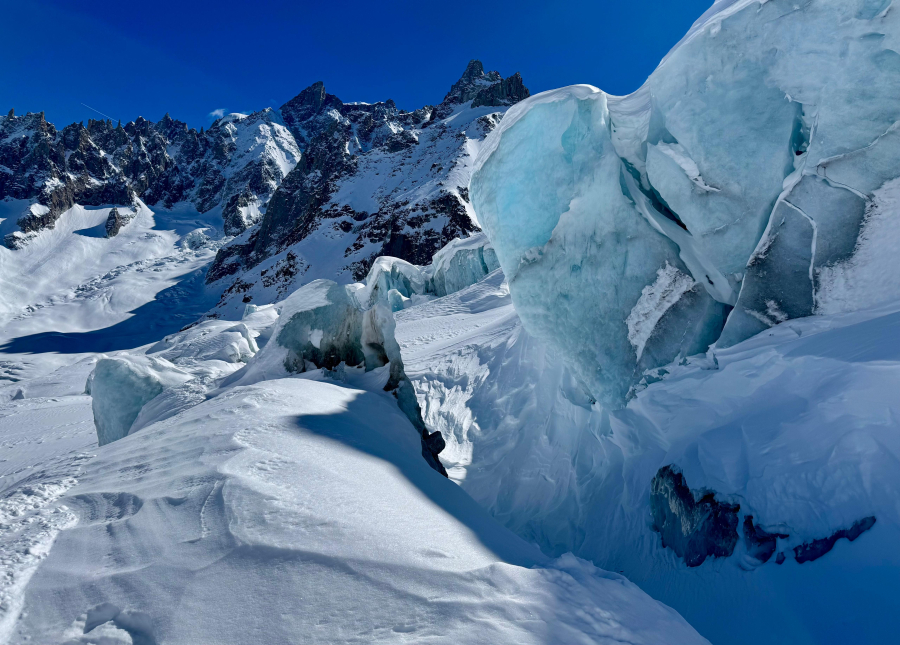
Argentiere Glacier, Ski Touring Skills in Chamonix, 2026
What I Learned on a 3-Day Ski Touring Course in Chamonix
Can you learn enough about ski touring in just three days? What is a ski touring course actually like? And do you need to be a complete beginner to benefit from one?
I went to Chamonix to find out.
I joined the 3-Day Ski Touring Skills Course in Chamonix in February of 2026. I wasn't completely new to ski touring, I'd learnt to tour informally, but I'd never had proper instruction.
That turned out to be exactly why the course was so useful.
Over three full days in the Chamonix backcountry, I picked up new techniques, learned more about how to make decisions in complex terrain, practised avalanche rescue and glacier skills, and, perhaps most importantly, came away with considerably more confidence in my abilities.
Who is a ski touring course for?
You don't need to be a complete beginner to get a huge amount from this ski touring skills course.
I knew the basics of putting skins on and getting uphill. But there is a big difference between knowing how to do something and knowing how to do it efficiently, confidently and safely in the mountains.
The course is designed for confident intermediate off-piste skiers who are new to ski touring, but I'd strongly recommend it to anyone who has already had a go at touring without formal instruction.
The course started relatively gently. Our first few runs were on the piste, giving our guide, Olly, the chance to assess the group's level. It was also a good opportunity for us to get our ski legs back and settle into the first day.
It wasn't long before we headed off-piste, skiing from the back of Le Tour.
As we moved through the backcountry, Olly talked us through his decision-making. Why would he avoid one slope but choose another? What was he looking for in the terrain? Where were the safer options? How did the shape and steepness of the mountain influence the route?
We spent time lapping the Tete de Balme chairlift, giving us the chance to get used to the deep snow, and put our skins on for the first time as the route would throw us out by a water reservoir at the Swiss Border from where we would need to take a short skin back to the chairlift.
Putting our skins on for the first time took some getting used to, and some funny moments with backsliding, falling into tree wells, and generally looking a tad Bambi on ice, but after a short while the group was moving swiftly and with purpose!
Day two took things up a notch.
We took the Grand Montets lift before touring further up to the Argentière Glacier, working on our skinning technique, using ski crampons, and learning how to make kick turns on steeper terrain.
This was where having proper instruction really started to pay off. We became quicker and more efficient at putting skins on, transitioning between uphill and downhill, and moving through steeper terrain.
As we climbed, the terrain became narrower and more consequential. Eventually we reached the point where it was time to transition. Skins off. Ski crampons off. Equipment stowed.
Time to ski, and what a descent. We skied beneath ice falls and across and over the Argentiere glacier, eventually reaching it’s head, where we stopped for one of the more spectacular lunch-spots on a Monday morning.
The uphill requires effort, but we were rewarded with access to a place that simply isn’t available from a chairlift.
Learning crevasse rescue and avalanche training
We spent time learning about glacier safety and crevasse rescue.
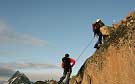
Olly demonstrated different techniques for rescuing someone from a crevasse, including how to build snow anchors using equipment you already have with you. It was practical and, importantly, made the seriousness of glacier travel much more tangible.
You can carry all the right equipment, but that doesn't mean much if you don't know how to use it.
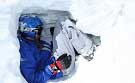
We also spent time in the avalanche rescue park. Olly demonstrated how to use a transceiver to locate a buried beacon, before getting us to practise the process ourselves. For anyone getting into ski touring and backcountry skiing, this felt like one of the most important parts of the course.
Day 3: The best powder day of the season?
By day three, we were all quicker in transitions, and we were more confident off-piste.
And, it turned out to be a powder day, which our guide, Olly quipped is always a Mountain Tracks promise on your final day…
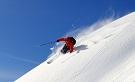
We spent the day making the most of the conditions and putting the skills we had learned into practice. A bit of local know-how from Olly meant we were repeatedly hitting the terrain from an angle that meant we had fresh lines all day.
It was a fitting end to the course.
How much fitness do you need for ski touring?
One thing I would definitely say is that a good level of fitness is useful. These are full days.
We'd have breakfast, get on the bus around 8:30–9:00am and then spend the day skiing, skinning and learning, taking lunch on the mountain, before coming off the mountain at around 4pm.
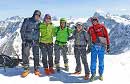
In the evenings, the group would meet for a beer to talk about the day's (mis)adventures, and then head out for dinner together.
What do you actually learn on a ski touring course?
Before the course, I thought I had a reasonable understanding of ski touring because I'd already done some. After three days, I realised how much I didn't know. We worked on:
- Skinning technique
- Kick turns
- Route planning and navigation
- Recognising and avoiding avalanche terrain
- Avalanche transceiver searches
- Crevasse rescue
- Using ski crampons
- Moving efficiently through steeper terrain
- Understanding how an experienced guide makes decisions in the backcountry
The exact itinerary naturally depends on weather, snow conditions and the experience of the group, but the underlying aim is consistent: to give you the skills and confidence to start exploring the backcountry more independently.
Is three days enough to learn ski touring?
You're not going to become an expert ski mountaineer in three days. Nor should you expect to.
But three full days with an expert guide can give you an incredibly useful foundation.
I finished the course much more confident in my technique and my ability to navigate steeper terrain while touring. More importantly, it gave me the confidence to start thinking about bigger objectives.
The Silvretta Traverse ski tour is now firmly on my radar, as are other hut-to-hut adventures such as the Dolomites Circuit.
Do you need to have ski toured before?
No — but you do need to be a reasonable and confident off-piste skier.
For someone who has never put skins on before, the course provides the opportunity to learn the fundamentals properly.
For someone like me, who had already done some informal touring, it provides something equally valuable: the chance to correct bad habits, learn more efficient techniques and build your understanding of the mountain environment.
What should you expect from a 3-day ski touring course in Chamonix?
Expect long days, plenty of learning and tired legs.
But also expect to ski some incredible terrain.
Chamonix is an extraordinary place to learn ski touring because you have access to such a huge variety of terrain.
You'll also need the right equipment. We picked up our rental touring equipment from a local shop, while Olly advised us each day about the technical kit we would need depending on the terrain and conditions.
In the evenings, the group would meet for a beer to talk about the day's (mis)adventures, and then head out for dinner together.
Would I recommend the course?
Absolutely. Three days with an expert guide gives you the opportunity to step into terrain that might otherwise feel beyond your experience, while learning how to approach it safely and intelligently.
Skiing on a glacier, skiing through fresh snow with the rest of the group, felt a long way from following a piste down to the bottom of a chairlift.
 Travel Website Development