

Ask a Guide: What makes Kyrgyzstan so special
Written by Max Balmford
30th June 2026
Kyrgyzstan
Ask a Guide: What makes Kyrgyzstan so special
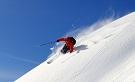
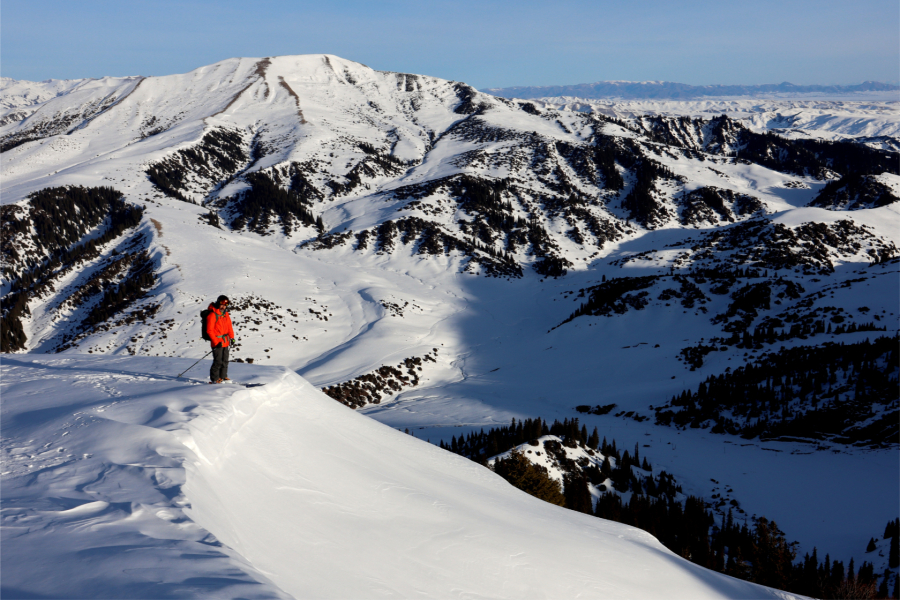
There's a moment that keeps coming up as I speak to Guido Candolini, our Kyrgyzstan guide, and it’s not a summit, or a particular line, it’s the powder itself - snow so deep and so dry that Guido recalls "when you take your skis off to remove your skins, you take one ski off at a time, if you take both off… you sink and say bye-bye"
"Big grains of sugar, and really deep - a metre of powder isn't unusual. It's not like Japan's powder, but in my opinion it's better, because every single time I've been there, I've found it deep."
Kyrgyzstan - often called the Switzerland of Central Asia – is also everything else that surrounds the skiing: yurts with saunas in the middle of nowhere, valleys you might have entirely to yourself, and a culture far removed from the Alps.
The terrain itself is forgiving. Slopes are mostly gentle and continuous, 30 to 35 degrees, rarely steeper, partly because the avalanche risk on anything wilder isn't worth the gamble. What you get instead is long, open, flowing terrain: wide-spaced trees in the lower 400–500m near Yrdyk, our first stop on the tour, then big, easy alpine faces above.
You will need serious width underfoot. Anything less than 100mm and you simply won't float, and splitboarders need to be strong, and ideally on a long board, to keep pace and manage the terrain. Rental sets are hard to come by and can be old and heavy, so we do not recommend trying to source touring equipment locally.
Days are built around steady vertical, at least 1,000m of ascent and descent, sometimes broken into a few shorter laps rather than one big push. In the Yrdyk valley, accommodation is capped at 20–25 people across two or three small groups, and with three separate valleys to disperse into, it's entirely possible to ski an entire mountainside without seeing another track. Occasionally you'll spot another group on a distant ridge. That's usually it.
Move on to Jyrgalan and the scenery shifts again - a small, mining town with its own school, where, as Guido notes, children bring their own heaters in winter. There's no tourist infrastructure here, no souvenir shops, just two genuinely warm local bars and a community going about its life exactly as it always has. It's a glimpse of a Central Asia most travellers never see.
After a day that typically wraps up around 4pm, the rhythm is simple: snacks on arrival, a sauna, then dinner. There's barely time to get a card game going before peeling off to bed. The Yurts sleep 4 people each, and are warm and comfortable once the fire is going (we ask you to bring your own sleeping bag). In Jyrgalan we stay in cosy guesthouse accommodation run by locals who furnish the group with local dishes and drinks.
Guests are consistently struck by how warm and accommodating the welcome is - and equally, by how unbothered the locals are by logistics that might rattle a UK traveller. The transfer from Bishkek to Karakol, for instance, takes several hours by road (a vastly improved journey since a new highway went in), broken up with a stop by the vast Issyk-Kul (‘hot lake’) and a restaurant visit. There's a weekly flight option between the two, but as Guido drily notes, it only goes "maybe" once a week, so road it is, and it's part of the adventure. On one trip, deep snowfall left even the toughest Russian 4x4s stuck on the track back to the lodge - solved, without fuss, by a snowmobile pickup in the dark, "for them, it's normal."
Who Is This Trip For?
This isn't a trip that demands prior ski mountaineering experience, but it does ask for solid off-piste experience and genuine touring fitness. You should be comfortable climbing 1,000–1,200m on skins, confident skiing a variety of snow, and happy with several consecutive long days. Boot crampons are carried as a precaution for the occasional icy summit ridge in windy conditions, but technical climbing kit - harness, ice axe isn’t required.
Our Ski Touring Expedition in Kyrgyzstan runs through the Terskey Mountains and Jyrgalan Valley, based in traditional yurts and guest houses with a maximum of four guests per yurt and a 6:1 client-to-guide ratio, led by an IFMGA Mountain Guide. View dates and prices or get in touch to talk through whether it's the right trip for you.
 Travel Website Development